Risk management and cost control remain top priorities – KPMG Singapore’s Wei Li Tea
She highlighted how innovation and digital transformation are driving resilience and growth across industries in Asia.
Across Asia, organisations are navigating complex risks, technological disruption, and growing sustainability expectations, whilst building resilience and effective governance have become essential to achieving long-term success.
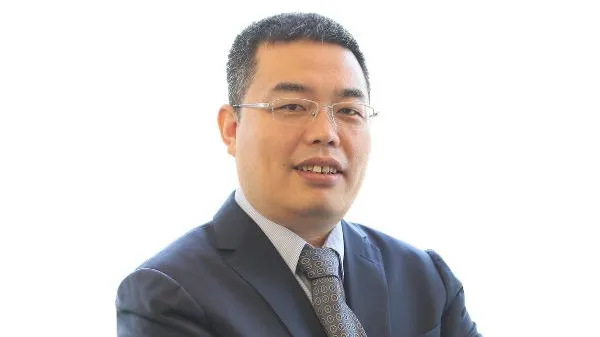
Wei Li Tea is a Partner in KPMG in Singapore’s risk consulting practice, with over two decades of experience advising boards and senior executives across Singapore, Hong Kong, and Shanghai. She specialises in enterprise risk management, corporate governance, compliance review, and internal audit. Wei Li has played a pivotal role in helping publicly listed and pre-initial public offering (IPO) companies align with best practices under the SGX listing rules and the Code of Corporate Governance.
As a returning judge for the Asian Management Excellence Awards 2026, Wei Li brings a deep understanding of how resilient governance, ethical leadership, and innovation drive sustainable business success. She is a respected facilitator of board and risk committee training, guiding organisations in refining key risk indicators, developing action plans, and strengthening governance practices. Her thought leadership continues to shape how organisations across Asia embed risk culture, align strategy with sustainability goals, and build long-term value through inclusive and forward-looking leadership.
Having worked across major business hubs in Asia, how would you describe the region’s evolving approach to enterprise risk management compared with global standards?
We are seeing a decisive shift in APAC from compliance-based risk management to a more strategic, integrated, and forward-looking enterprise-wide approach that is closer to global standards established by various frameworks. These global benchmarks emphasise the importance of embedding risk into strategy, decision-making, and performance management, with clear accountability and a strong culture of transparency and foresight.
In contrast, many organisations in the region are still strengthening these fundamentals. The shift underway in Asia reflects a growing understanding that effective risk management is a catalyst for sustainable growth and innovation, not merely a mechanism to avoid loss. Increasingly, boards, and executive teams are investing in predictive, tech-enabled capabilities that help businesses identify relevant risk events, assess their impacts and facilitate timely responses.
This evolution is being accelerated by regulatory harmonisation, investor expectations, and shifts toward greater accountability. The direction is clear: Asia is building a risk culture that balances agility with discipline – one designed to anticipate disruption, adapt to change, and strengthen resilience amidst both global volatility and local complexity.
What approaches have you found most effective in embedding risk awareness across all levels of an organisation?
Organisations succeed when they view risk as integral to decision-making and value creation.
Risk considerations should be integrated into strategic planning, performance metrics, and day-to-day operations so employees understand how risk impacts their roles and the organisation’s objectives.
Beyond leadership alignment, what’s equally important would be to encourage dialogue on emerging risks with teams via mechanisms such as scenario-based training, mentorship programmes, and cross-functional forums.
Technology also plays a role: digital dashboards and predictive analytics can democratise risk insights, making them accessible to all levels and enabling timely responses. When people at every level understand both their accountability and their influence, risk awareness becomes self-reinforcing – driving resilience, trust, and long-term performance.
How can organisations align sustainability and ESG priorities with long-term business strategy and sound governance?
Sustainability is now central to strategy and governance. KPMG’s 2025 Global CEO Outlook shows that 61% of CEOs now believe they can meet their 2030 targets, keeping them on track for their net zero ambitions—a marked increase from 51% in 2024. Despite growing CEO confidence, the path forward requires embedding ESG into the DNA of decision-making. It is therefore crucial for boards to integrate ESG metrics into business performance frameworks, so that sustainability drives both profitability whilst achieving environmental and social outcomes.
The next stage of leadership lies in moving beyond alignment to activation – using ESG as a catalyst for redefining business models and competitive advantage. Leading organisations are embedding sustainability into innovation pipelines, using data to anticipate evolving stakeholder expectations, and reorienting operating models around long-term value creation. Boards are reframing governance to focus on dynamic oversight and systems thinking, ensuring that ESG ambition translates into strategic agility and future readiness. This shift distinguishes the businesses that are not only adapting to a low-carbon economy but shaping it – turning sustainability into a source of enduring growth and leadership in a rapidly transforming Asia.
How are business leaders in Asia adapting their management approaches to remain agile amidst rapid market and technological change?
Agility today means embracing digital transformation with purpose and speed. Asian leaders are investing in emerging technologies, but the differentiator lies in how they are rethinking go-to-market strategies and supply chain models to stay ahead of rapid shifts in customer expectations and technological disruption.
Artificial intelligence (AI) is at the forefront of this transformation, both as a tool for operational efficiency and as a service that enables new business models. Companies that keep a close pulse on AI market developments and integrate these insights into their commercial strategies will be better positioned to pivot quickly and capture growth opportunities. This includes leveraging AI-driven insights to evolve supply chain strategies and respond to market changes in a timely, agile manner.
KPMG’s 2025 Global CEO Outlook underscores that sustained value from AI depends on trust, governance, and talent. Leading organisations are those that balance experimentation with accountability – embedding ethical frameworks, upskilling their workforce, and fostering cultures that encourage innovation whilst safeguarding integrity.
Looking ahead, which emerging risks or trends do you believe will most influence management and governance practices in Asia in the coming years?
The risk landscape in Asia is becoming more interconnected and unpredictable. The biggest challenge for boards and leadership teams will be defining what “sustainable governance” means in an era of constant disruption—whether it’s AI governance, ESG governance, or broader risk oversight. Rapid advances in technology and R&D are reshaping industries at lightning speed, creating both unprecedented opportunities and complex risks. This pace of change will require organisations to pivot frequently, recalibrating governance frameworks to address tech-driven risks without losing sight of long-term strategic objectives.
At KPMG, we see governance evolving from a compliance function to a dynamic capability that enables innovation whilst safeguarding trust. Companies that can harness risk as a catalyst for strategic reinvention – rather than viewing it solely as a defensive measure – will set themselves apart in the next wave of competition. Human judgment must remain central to this process, even as automation and AI become more pervasive. This means uplifting workforce capabilities through continuous training and embedding ethical considerations into decision-making.
Leaders must therefore adopt a holistic view of risk. Boards that invest in adaptive governance, scenario planning, and risk intelligence will be best positioned to navigate volatility and shape sustainable growth in Asia’s future economy.
As a returning judge for the Asian Management Excellence Awards, how do you recognise organisations that show both strong management and forward-looking leadership?
At the Asian Management Excellence Awards, we look for organisations that combine strong management practices with visionary leadership. Those that integrate risk, innovation and sustainability into their core strategy stand out.
The most successful leaders and businesses are those who turn uncertainty into opportunity – leveraging data, empowering teams, and fostering cultures of accountability and innovation.
They demonstrate operational excellence, proactive risk management, a commitment to innovation and a forward-thinking mindset.
Importantly, companies that understand risk is as much a safeguard as it is an enabling force for innovation and transformation will emerge as strong competitors in the new future. These are the organisations shaping Asia’s future, and it is a privilege to recognise their achievements.














 Read Here
 Advertise
 Sign Up