Insurers tighten control over Hormuz shipping routes
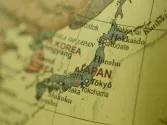
Japan and South Korea face higher exposure to Gulf energy risks.
Insurers are tightening control over voyages through the Strait of Hormuz, imposing stricter approvals and war-risk conditions that are increasingly shaping whether ships proceed at all.
“What has shifted is not demand itself, but how risk is priced, managed, and operationalised in delivering that demand,” Oliver Miloschewsky, head of shipping for Asia at Aon Plc, told Insurance Asia.
He said the Iran war has become a permanent operating condition for shipping companies, insurers, and cargo owners rather than a temporary disruption.
Demand for crude, liquefied natural gas (LNG), and dry bulk commodities across the Asia-Pacific region remains firm, but shipping conditions have changed materially.
Traffic through the Strait of Hormuz remains well below pre-crisis levels, with insurers continuing to assess voyages individually.
“Recent vessel turnarounds and limited resumptions of transit should not be interpreted as a meaningful signal of restored market confidence,” Miloschewsky said in an emailed reply to questions.
He added that insurers would need sustained declines in threats, clearer security conditions, and stronger risk mitigation before confidence returns.
K&L Gates said traffic remains far below the hundreds of vessels that crossed the strait daily before the war.
“Markets are pragmatic—many mainstream shipowners are still avoiding the route,” the law firm said in emailed comments. “Confidence is conditional, not structural.”
Japan and South Korea remain the most exposed economies in Asia due to their dependence on Gulf energy imports.
“South Korea and Japan are particularly exposed, and that exposure is reflected in how energy majors and state-owned buyers are structuring charter arrangements and building in routing optionality,” K&L Gates said.
South Korean buyers are exploring alternative energy sources, including US LNG and Australian supply, though such shifts take time.
Shipping companies are also adjusting operations. Shipowners are becoming more selective in deploying vessels, whilst charterers are demanding more flexible contracts and routing.
“There is also a notable uptick in back-to-back chartering structures and shorter charter durations as both owners and charterers seek to limit forward exposure in unpredictable markets,” K&L Gates said.
Voyage planning now includes more routing flexibility to adapt to shifting insurance conditions.
The Hormuz disruption is also adding to wider geopolitical pressures across Asia.
K&L Gates said Taiwan-related tensions are the most significant medium-term risk, warning that escalation could disrupt semiconductor supply chains and container trade across the Pacific.
Japan-China tensions are also gradually reshaping trade flows as Japanese companies diversify sourcing toward Southeast Asia and India.
“The current shipping market is no longer reacting to isolated geopolitical incidents,” it said.
For shipping companies, the immediate priority is preparation. K&L Gates said operators should review charter and cargo contracts, particularly clauses covering force majeure, war risk, and route deviation, as many older provisions no longer match today’s risk environment.









 Read Here
 Advertise
 Sign Up