Japan's US$158b M&A wave moves away from China toward ASEAN and US
Buying a Japanese firm gives Western buyers indirect exposure to Southeast Asia without investing directly in the region.
Japanese outbound M&A is shifting towards North America and ASEAN as tariff uncertainty and supply-chain changes reshape deal strategy across Asia.
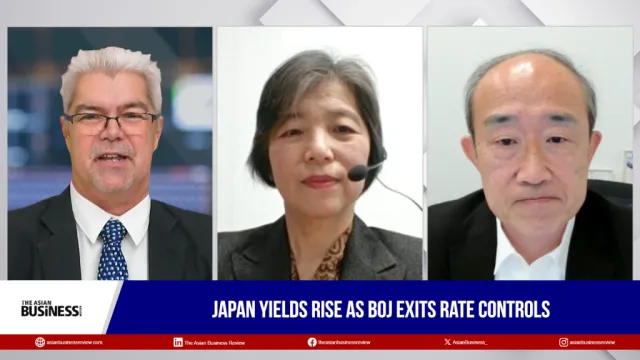
Hikaru Okada, Head of Deal Advisory for the Asia-Pacific region at KPMG, said Japan remains one of the region’s most active cross-border acquirers, with outbound M&A reaching US$158b. Japanese capital that previously flowed heavily into China is now being redirected as companies reassess market exposure.
“The destination has been shifting to North America and ASEAN countries,” Okada said.
China is not disappearing from Japanese deal plans, but the pace is expected to stay below earlier peaks. Okada said capital flows into China may remain low for the next six months or longer because of political uncertainty, although some technology and industrial sectors remain important for Japanese companies.
Tariffs are also changing acquisition logic. Okada said higher US tariffs are making local operations more important than exporting goods or services from Japan, Korea or other Asian markets. That is pushing companies to consider US acquisitions to build capacity closer to customers.
Across ASPAC, active consolidation sectors include energy, technology, media and telecommunications, industrial manufacturing, financial services, and consumer and retail. Australia and ASEAN remain common destinations for outbound capital.
Indonesia is drawing attention because of its large population and growing consumer and industrial markets. Okada said capital inflows are expected from Japan and North America, with Korea and China likely to follow.
The underappreciated opportunity may sit in Japan and Korea. Okada said both markets are viewed as more aligned with Western economies, making them attractive for institutional capital.
Japanese and Korean companies also offer indirect exposure to Southeast Asia because many have manufacturing bases in the region. For Western investors, acquiring assets in Japan or Korea can provide an ASEAN route without buying directly in the target market.
For dealmakers, the test is whether acquisitions can secure supply chains, reduce geopolitical exposure and place companies closer to end markets.

















 Read Here
 Advertise
 Sign Up







Commentary
Malaysian brands know what they want to be — their incentive structures disagree
Asia plays part in $129t global credit market pool
Rethinking the role of video infrastructure in Asian retail
Why APAC digital leaders must overhaul content amidst fractured consumer discovery
Why bigger digesters alone won't solve Asia's renewable energy challenge
Only the agile will win across ASEAN’s evolving markets
Scaling for resilience: What Asia Pacific’s bioenergy markets can learn from each other
Asia is leading payments modernisation and banks can't afford to fall behind
‘Tokenmaxxing’ – The wrong AI race to run in Singapore
To outsmart modern fraud, we must first know the enemy