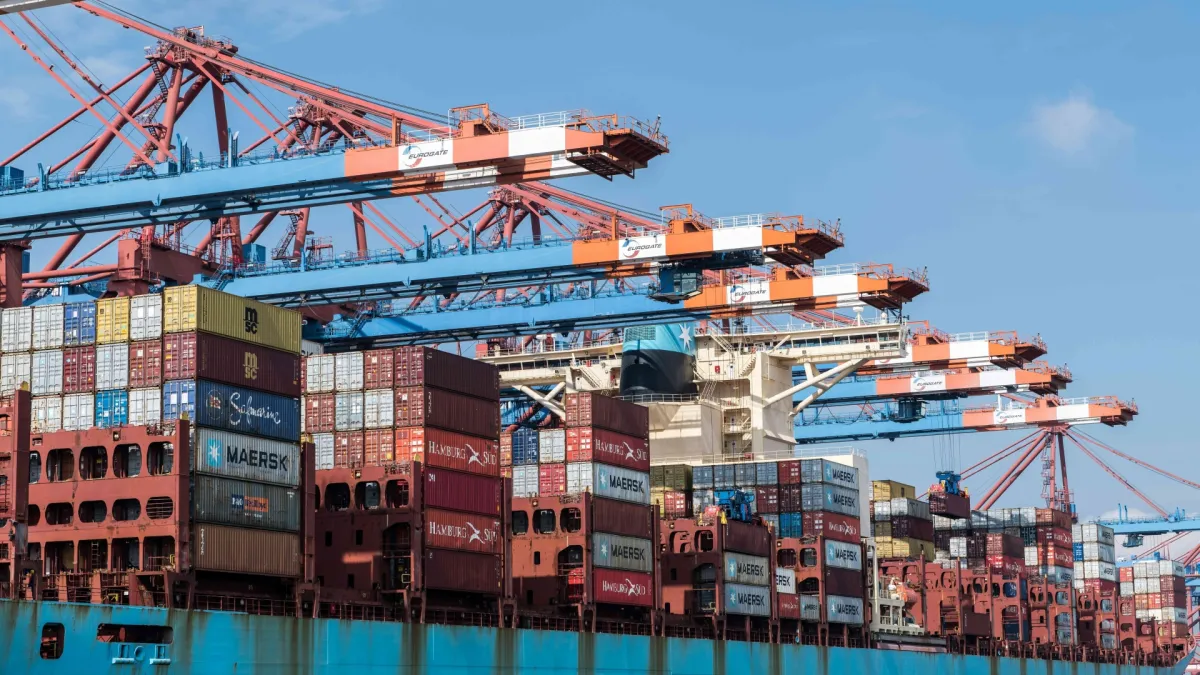
Asia-Pacific solidifies global trade leadership as Singapore tops rankings
The city-state led in trade depth and breadth whilst it ranked second in capital flows.
The Asia-Pacific region strengthened its role in global trade in 2025, with Singapore ranking as the world’s most connected economy, according to the DHL Global Connectedness Report 2026.
The region expanded and diversified trade flows despite geopolitical tensions and rising tariff uncertainty, it added.
Singapore maintained the top position amongst 180 countries, ranking first in trade depth and breadth and second in capital flows out of 158 countries.
Its inward foreign direct investment stock remained the largest globally, reflecting strong international integration relative to its domestic economy.
East Asia and the Pacific accounted for 32% of global trade in 2025, up from 24% in 2001, whilst intra-Asia trade grew, with China’s exports to ASEAN markets rising 13% to $79b.
Other economies advancing include Malaysia (#16; +13 ranks), Thailand (#27; +7), Korea (#31; +6), Taiwan (#32; +4), and Vietnam (#36; +3).
Global trade expanded faster in 2025 than in any year since 2017, excluding the COVID‑19 period, partly due to accelerated shipments from US importers ahead of tariff increases, the DHL report said.
Although US imports fell below prior-year levels, rising Chinese exports to non-US markets helped sustain global trade volumes. US–China trade accounted for only 2.0% of world trade, down from 2.7% in 2024.
Artificial intelligence-related goods drove 42% of goods trade growth in the first three quarters of 2025, benefiting tech supply chains in Taiwan, Korea, Singapore, and Malaysia.
People flows—including migration, travel, and student mobility—reached record levels, particularly in Asia-Pacific hubs such as Singapore and Hong Kong, whilst capital flows remained resilient.
Most countries maintained trade and investment ties with traditional partners, limiting the impact of US–China tensions on global connectedness.
Global goods trade is projected to grow 2.6% per year through 2029, despite rising US tariffs, as most trade does not involve the US.
New agreements, such as the India-EU free trade deal, offer alternative market access, the report added.
















 Read Here
 Advertise
 Sign Up