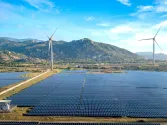
Pakistan solar boom drives 21% jump in power demand
Grid generation fell 3% as rooftop systems supplied all new electricity demand.
Pakistan's electricity demand rose 21% in the two years to financial year (FY) 2025, with distributed solar meeting all new demand as grid electricity generation declined, according to a report published by Ember and Renewables First.
The report said electricity demand increased by 33 terawatt-hours (TWh) between FY2023 and FY2025, driven entirely by distributed solar generation, which more than tripled to 51 TWh from 15 TWh during the period. Grid electricity generation fell 3%.
Distributed solar accounted for 28% of the country's electricity generation in FY2025, up from 10% in FY2023.
“Taking into consideration transmission losses and theft from grid electricity, distributed solar accounted for 32% of electricity supply,” the report said.
Renewables First estimated Pakistan's distributed solar capacity at 38 gigawatts (GW) as of June 2025, of which, 27 GWs were installed in the past two years, equivalent to the capacity of all operating coal-, gas-, and oil-fired plants ever built in Pakistan.
The expansion of distributed solar has increased electrification across the economy, lifting Pakistan's electrification rate to 21.7% in FY2025 from 17% in FY2023, close to the global average of 22%.
"Pakistan has a thirst for energy, and solar is providing it," said Dave Jones, Chief Analyst at Ember. "Distributed solar is so fast and cheap to build, that it is actually driving up electricity demand."
The report said distributed solar has reshaped energy use across multiple sectors, with electricity demand in the residential sector rising 32% in two years as households increased the use of electrical appliances, particularly cooling equipment.
Industrial electricity demand rose 22% over the same period as distributed solar expanded and gas use fell amidst higher prices.
Commercial electricity demand rose 39%, the fastest growth amongst all sectors, with solar helping businesses manage rising power costs and reliability risks.
In agriculture, distributed solar displaced diesel and grid electricity as solar-powered tubewells expanded, with the report estimating that the shift reduced diesel consumption by about 1.9 billion litres annually.
"Distributed solar is providing millions of Pakistani homes, farms, and businesses with affordable, reliable electricity," said Nabiya Imran, Associate for Energy Insights at Renewables First.















 Read Here
 Advertise
 Sign Up