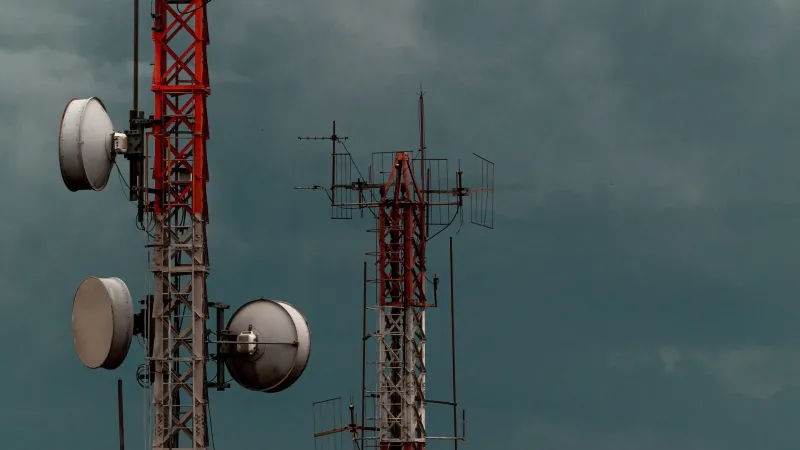
Singapore telecom crowding persists after Simba-M1 deal collapse
Its small market has left the mobile and fixed broadband sectors saturated.
Singapore’s telecommunication market remains crowded after the collapse of the proposed $1.4b acquisition of M1 Ltd. by Simba Telecom Pte. Ltd., keeping pressure on operators in the saturated market, analysts said.
“Consolidation should eventually happen in Singapore, if not Simba and M1, maybe it can happen in some other form,” Hussaini Saifee, an equity research analyst at Maybank Securities (Singapore) Pte. Ltd., told Singapore Business Review.
Keppel Ltd. and Australia-listed Tuas Ltd., Simba’s parent company, announced on 22 May that the proposed acquisition had been scrapped after regulatory conditions were not met before the deadline.
The deal collapsed after the Infocomm Media Development Authority suspended its merger review and opened an investigation into Simba over an alleged unauthorised use of spectrum.
Saifee said Singapore’s small market size has left both the mobile and fixed broadband sectors heavily saturated.
Market Report Analytics said in a January report that Singapore’s telecommunication market remains dominated by four operators: Singapore Telecommunications Ltd., StarHub Ltd., M1, and Simba.
Tan Joo Seng, an associate professor at Nanyang Technological University’s Nanyang Business School, said the failed deal has revived broader questions over whether Singapore’s market structure remains economically sustainable.
“Telecom consolidation pressures globally tend to persist because the economics increasingly favours scale,” he said in an emailed reply to questions.
He said M1 remains strategically valuable because telecommunication infrastructure assets are difficult to replicate, with the operator holding spectrum, network infrastructure, enterprise clients, and an established subscriber base.
Saifee added that consolidation could lower network operating and capital expenditure costs by 20% to 30%.
Saifee and Tan identified StarHub as a possible future buyer, with the latter citing its existing infrastructure collaboration and potential synergies.
Regional telecommunication groups and infrastructure-backed investors could also explore opportunities, although Tan noted that Singapore’s mature market might limit straightforward growth prospects.
“The challenge is not just identifying who can buy M1, but who can make the economics and regulatory dynamics work simultaneously,” he added.







 Read Here
 Advertise
 Sign Up