PwC China’s Wilson Chow puts emphasis on execution, trust, and measurable impact in the age of AI
As AI adoption accelerates, he advocates for an innovation that is grounded in governance, customer value, and measurable business impact.
Artificial intelligence (AI), cloud technologies, and digital transformation continue to redefine industries worldwide, hence the ability to distinguish meaningful innovation from short-term hype has become crucial. In this rapidly evolving technology landscape, organisations are no longer evaluated solely on how quickly they adopt emerging technologies. They are now assessed on how effectively they execute transformation and create sustainable value.
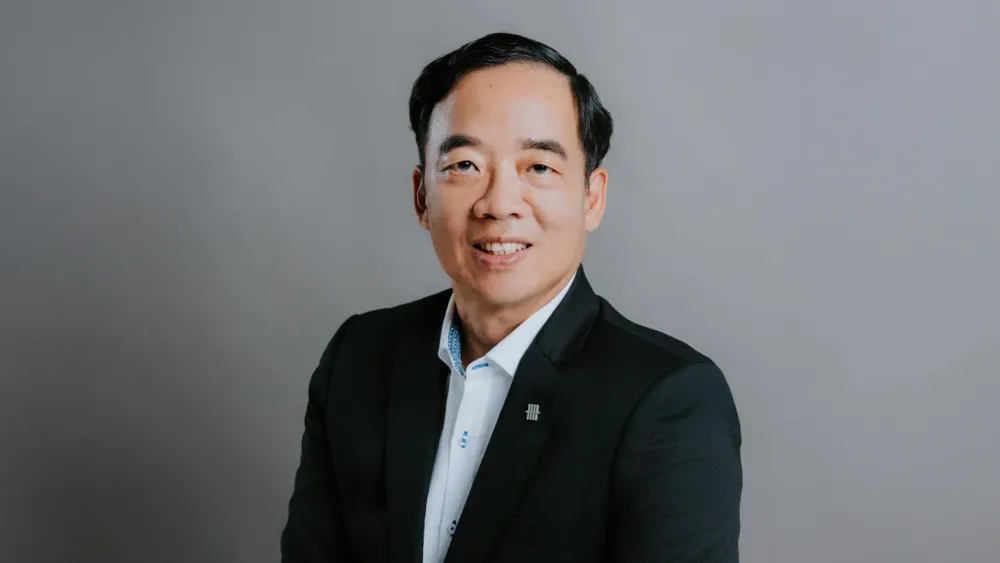
Bringing expert perspectives is Wilson Chow, leading the global technology, media, and telecommunications (TMT) industry practice at PwC China, whilst also heading the firm’s TMT and Artificial Intelligence practices in the Chinese Mainland and Hong Kong SAR. He has spent more than 30 years advising startups and multinational technology giants in the technology ecosystem.
Over the course of his career, Chow has guided businesses through the rise of internet services and mobile telecommunications to cloud computing and now AI-driven transformation. His work spans assurance, advisory, capital market transactions, governance, systems and controls, digital transformation, and deals advisory.
Chow’s experience has established him as a trusted advisor to companies navigating business reinvention efforts and major technology transitions. It has also positioned him at the centre of conversations surrounding AI governance, innovation, digital trust, and long-term enterprise value creation.
As a judge for the Asian Technology Excellence Awards 2026, Chow spoke about the misconceptions in digital transformation as well as the major shift in how investors and boards evaluate technology businesses and strategies.
Across 30 years of advising TMT companies, what's the most common reason digital transformation programmes fall short, and how much of that is technology versus people and culture?
In my experience, transformation most usually falls short not because of the technology itself but due to failure to connect technology investment to a clear business outcome, operating model change, and corresponding leadership accountability. The split is heavily weighted towards people, culture, and execution discipline, perhaps 70% people and operating model, and the remaining 30% is technology, because most organisations can buy technology, but far fewer can change behaviours, incentives and decision-making at scale for the workforce.
I have also found that too many programmes are still run as back-end IT projects rather than as a transformation of the entire enterprise. Too often, in such cases, the front line does not adopt changes, and management does not track value realisation rigorously enough.
PwC has extensive experience empowering companies to navigate digital transformations, preparing them for modern business dynamics. With this expertise, we understand the importance of guiding companies in crafting strategies that align talent management, governance, and process redesign from the planning phase. According to insights from our latest Global CEO Survey, unveiled at the Global Economic Forum, trust, workforce capability, and the ability to reinvent the business model consistently emerge as vital components for successful transformation.
In summary, digital transformation underdelivers when companies underestimate how difficult it is to change the organisation, not when they underestimate the sophistication of the technology.
What lessons from past tech cycles are still relevant in today’s AI-driven wave?
History may not necessarily repeat itself, but we do see some recurring themes. One notable lesson is that excitement alone does not create durable value; companies that deliver sustainable value are those that translate a breakthrough technology into real customer utility, creating new revenue streams with scalable economics. We saw this in the rise of internet services and the mobile telecommunication wave, as well as the cloud era: early enthusiasm often outruns commercial readiness, and the strongest players are usually those that pair innovation with disciplined execution.
Another valuable lesson is that infrastructure matters just as much as the application. Data quality, cyber resilience, governance, responsible use of technology and access to compute are strategic differentiators, not back-office considerations.
A final lesson I’d like to share is that regulation invariably catches up with innovation. It is more cost-effective to build compliance, transparency and trust into new models at their inception, rather than hoping to retrofit them after growth has already accelerated.
PwC’s studies on responsible AI and our Global CEO Survey arrive at the same conclusion: leaders are excited by AI’s productivity potential, but they recognise that trust and governance will determine who captures value sustainably.
Therefore, whilst technology evolves, the fundamentals remain unchanged. Companies should focus on use cases built on strong foundations and avoid confusing adoption hype with long-term competitiveness.
Tech valuations have gone through extreme cycles in recent years. From your deals advisory experience, how are investors and boards recalibrating how they assess the long-term value of AI-driven businesses and is the market getting better at it?
Through our collaboration on numerous deals with clients, we have found that investors and boards are becoming much more rigorous in separating AI-enhanced narratives from genuinely defensible AI business models. The key shift is from valuing promise to valuing proof, i.e. they now want evidence of a proprietary data advantage, a realistic path to monetisation, customer stickiness, margin resilience and the ability to scale without runaway infrastructure costs.
In recent deals, we are seeing far greater scrutiny around the quality of earnings, unit economics, model governance, IP ownership, cyber and regulatory exposure, and whether AI is truly embedded in the product or simply layered into the story.
PwC Global M&A industry insights show that in more volatile markets, buyers reward resilience, strategic fit, and synergies far more than speculative growth. This is particularly relevant in the current AI cycle. The companies that will justify premium valuations over time are those that can demonstrate technological leadership, together with sustainable differentiation, trusted deployment and measurable business outcomes.
How should companies prioritise investments across multiple emerging technologies without spreading themselves too thin?
Companies should start with an overall technology investment strategy, but not shop from a technology catalogue. The right strategy should not just focus on which technologies we should invest in, but also on which two or three capabilities will most improve growth, productivity, resilience, and customer experience in our business.
We generally advise our clients to create a portfolio split between a small number of near-term, value-accretive use cases and a more selective set of longer-horizon bets, with explicit stage gates for funding and scaling. In practice, that means backing foundational enablers, such as cloud, data, cyber, and AI governance, before trying to industrialise more experimental technologies that depend on those capabilities.
PwC’s findings from the Annual Global CEO Survey suggest that companies perform better when they concentrate resources on a few business-critical transformation priorities rather than dispersing capital across too many disconnected pilots.
It is also important to be realistic about organisational absorption capacity; even good technology investments fail when there is not enough talent, management bandwidth or change readiness to implement them properly. The best prioritisation frameworks are, therefore, commercially led, capability-aware, and discerning about stopping initiatives that are interesting but not material.
Which markets in Asia do you believe will drive the next wave of global tech innovation?
Asia’s next wave of innovation will not come from one market alone; it will come from a set of ecosystems with different strengths across scale, talent, capital, manufacturing depth, and digital adoption. However, there are several key countries which stand out.
China will remain hugely important because of its platform scale, advanced manufacturing base, AI ambition and strength in commercialising innovation rapidly across large user markets. India stands out for digital public infrastructure, software talent, engineering depth and the ability to build scalable, cost-efficient innovation models that can travel globally. Singapore will continue to play an outsized role as a regional hub for capital, regulation, enterprise innovation and cross-border technology development. South Korea, Japan and, increasingly, Indonesia and Vietnam all bring strengths in semiconductors, advanced industries, digital consumers, and emerging start-up ecosystems.
The real story is not a single winner but an interconnected Asian innovation landscape that is becoming more influential in shaping global technology trends.
As a judge at the Asian Technology Excellence Awards 2026, what qualities or innovations do you consider essential when evaluating nominees?
It is a pleasure to be invited back as a judge. In evaluating nominees, I first look for measurable impact, since the strongest technology stories are not simply inventive; they deliver clear outcomes for customers, employees, citizens, or shareholders.
Second, I assess whether the innovation is genuinely differentiated, reflecting original thinking and strong execution and demonstrating the ability to solve a meaningful problem better than existing alternatives.
Third, I place significant weight on scalability and sustainability. Can the solution grow, can it be trusted, and is it built on sound foundations in areas such as governance, cyber, data quality and responsible AI?
The most impressive nominees will be those who combine innovation with execution, trust, and demonstrable business or societal value.










 Read Here
 Advertise
 Sign Up