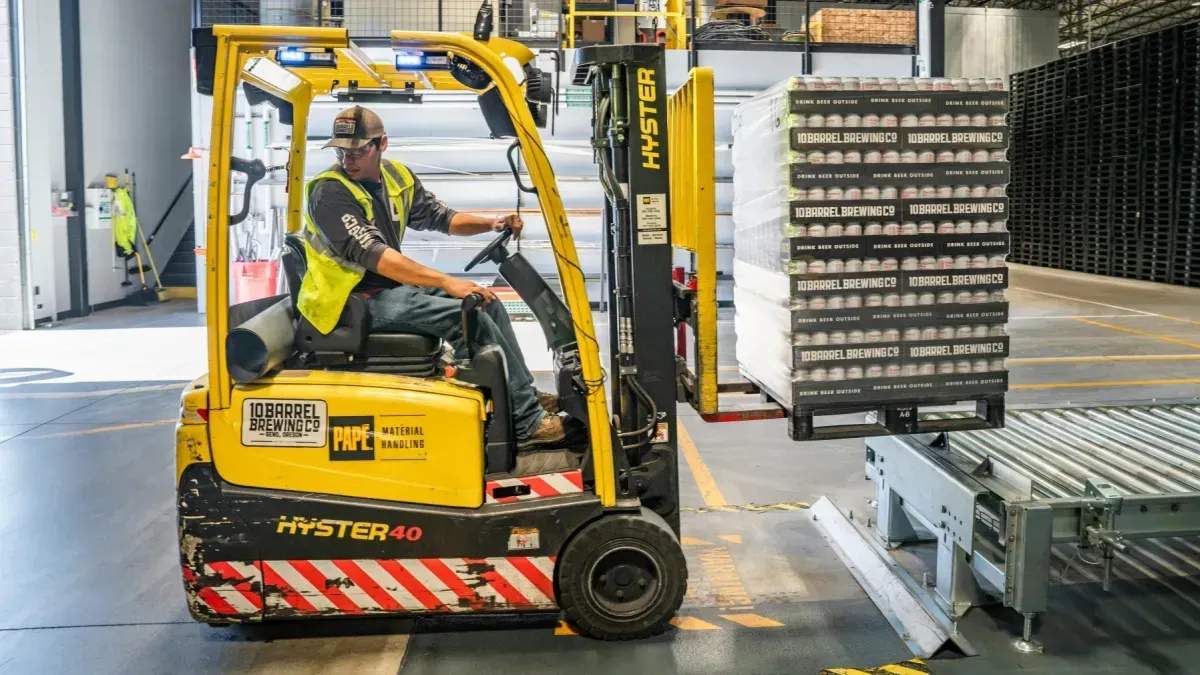
Logistics rents to keep rising in over half of global markets
The report said supply chain uncertainty is pushing occupiers to prioritise resilience, among others.
Global logistics and industrial rents are expected to keep rising in many markets as companies redesign supply chains to manage disruption, higher costs, and geopolitical risks, according to Cushman & Wakefield.
The firm’s Waypoint: Global Industrial Dynamics 2026 report analysed 135 logistics and industrial markets worldwide, up from 127 markets in 2025.
Cushman & Wakefield said global supply chains are under structural pressure as disruptions become more frequent and severe.
This has made real estate strategy more important to companies seeking to improve resilience, manage operating costs, and secure critical locations.
Global logistics rents are now about 36% higher than in 2020, although rental growth has moderated from recent peaks. In 2025, 61% of tracked markets recorded positive rental growth, whilst 24% saw rent declines and 15% were stable.
The report said further rental growth is expected in 54% of markets over the next three years as supply tightens.
In the Asia Pacific, rental trends were mixed. The Philippines, Australia, Japan, and Singapore recorded strong rental growth due to limited availability and robust demand, whilst rents fell in mainland China markets where softer occupier demand coincided with high vacant supply.
Singapore remained one of the higher-rent APAC logistics markets, supported by its role as a key trade gateway and demand for well-located space.
Operating costs also continued to shape occupier decisions. From 2024 to 2025, global rents rose 2.2%, wages increased 2.4%, whilst electricity rates slipped 0.4% on average.
Labour costs varied widely across regions. APAC had the lowest indexed average wage at 57, compared with the global median rebased to 100. Singapore, Hong Kong, and Japan were broadly in line with the global average, whilst Australia had the highest wages in the region.
Electricity costs have also become more important in site selection as logistics and manufacturing occupiers adopt automation, electrification, cold storage, and energy-intensive systems.
The report said global market conditions remain broadly tenant-favourable, with 52% of markets favouring tenants in 2026. However, conditions are expected to tighten by 2029, with tenant-favourable markets falling to 33% and landlord-favourable markets rising to 39%.
E-commerce remains the leading driver of occupier demand over the next three years. Retail distribution and general manufacturing are also expected to remain major demand drivers, whilst new demand is emerging from energy, high tech, automotive, aerospace, and cold storage.
Cushman & Wakefield said geopolitical risks and energy shocks continue to affect occupiers. The Middle East conflict has contributed to reduced fuel supply, shipping route disruptions, and higher transport costs, with broader risks including inflation, delayed investment, and potential pressure on interest rates.















 Read Here
 Advertise
 Sign Up