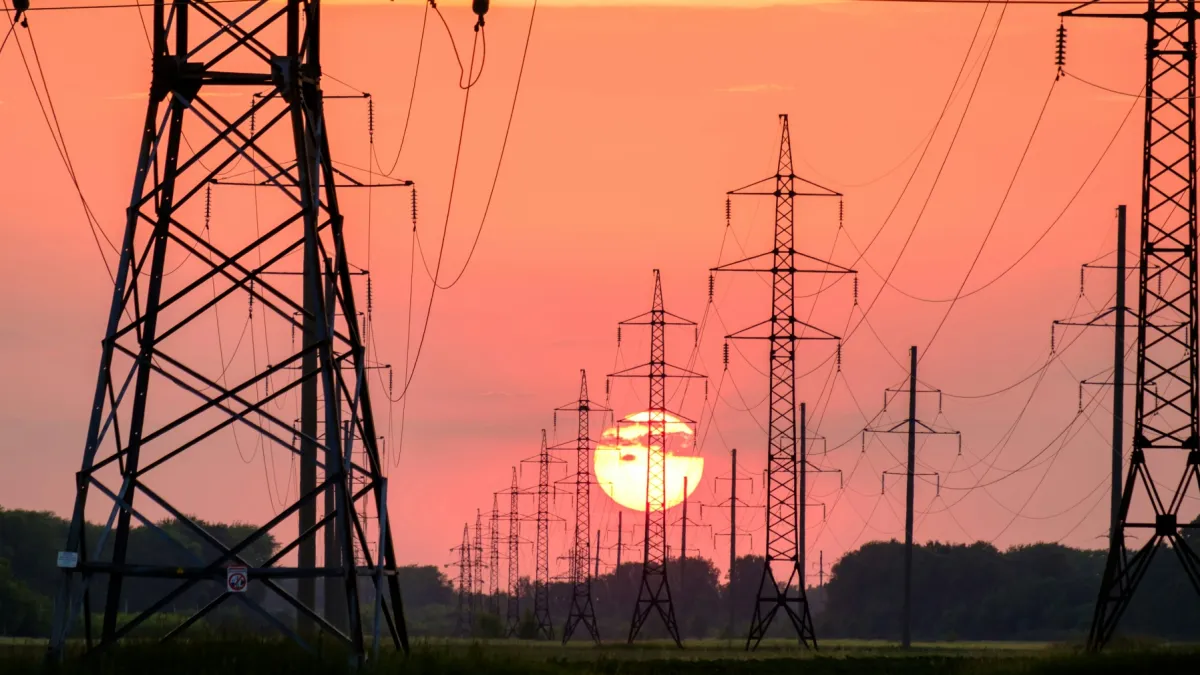
Ageing grids push AI to forefront as power strains mount
AI boosts grid capacity without new lines as ageing assets strain utilities.
The global electricity system faces rising strain from demand growth, renewable penetration, and ageing infrastructure, due to rising demand from electrification, urbanisation, and data centre expansion.
A joint report, published by Boston Consulting Group and Temasek, estimated that 25% to 30% of US transmission and distribution assets are approaching the end of their useful life, with extreme weather, geopolitical disruption, and cyber threats increasing reliability pressure.
The investment model is shifting from physical buildout to artificial intelligence (AI)-led orchestration of existing assets.
Utilities have traditionally expanded capacity through transmission, storage, and generation, with AI changing this by improving monitoring, forecasting, and dispatch of existing infrastructure.
AI deployment increases asset output without new construction, the report noted.
Battery storage fleets using AI optimisation generate 25% to 30% more revenue from the same hardware, whilst dynamic line ratings increase transmission capacity by 10% to 30%.
Predictive maintenance and asset monitoring represent the largest AI opportunity at $22b.
Systems replace reactive maintenance and static line ratings with real-time condition monitoring, failure prediction, and dynamic capacity allocation.
AI also reduces wildfire risk by detecting vegetation and line interaction risks.
Virtual power plant orchestration represents $2b in value, with AI aggregating distributed energy resources, including rooftop solar, home batteries, and electric vehicle chargers, into dispatchable grid assets.
Additional segments include grid planning and design at $3b, congestion management at $3b, and battery dispatch optimisation at $2b.
The report projects that the total annual value from AI in grid and storage systems reaches about $32b by 2028.
Vertically integrated utilities capture about $20b, distribution operators with $6b, and transmission operators with $4b.
Battery and virtual power plant operators capture smaller totals but higher margin gains of five to six percentage points.
















 Read Here
 Advertise
 Sign Up