
Breaking the myths around turbomachinery downtime in APAC
By Brian ByrneWhen technical depth is lacking, outages extend and costs escalate.
Across APAC, energy producers are confronting a sharp rise in unplanned downtime at a time when equipment is ageing and technical expertise is becoming harder to secure.
Global reports show that annual unplanned downtime in the oil and gas sector has surged to $149m per facility, a 76% increase in just two years, whilst upstream operators now lose an average of 27 days per year to unscheduled outages, amounting to about $38m in annual losses.
Thermal power plants are experiencing even more acute strain, with 69% of industrial plants reporting unplanned outages at least once a month and average losses of $125,000 per hour. In this context, several persistent myths continue to obscure the real risks facing turbomachinery and the skills required to maintain it.
Myth 1: Unplanned downtime is stable and largely under control in APAC
Unplanned downtime continues to rise across the sector and remains a major operational and commercial challenge for operators. The global steam turbine MRO market, valued at $22.7b in 2023 and expanding towards $36b by 2032 with Asia-Pacific as the dominant region, highlights how central turbomachinery reliability has become to power generation.
However, the scale of downtime, the cost of outages and the resulting pressure on ageing infrastructure reflect growing strain on energy producers.
Realities
Many assumptions still reflect a baseload operating model, whilst turbines are now cycled more frequently, and ageing assets remain in service longer. These conditions accelerate wear in ways that traditional diagnostics may not fully capture, and reduced access to skilled expertise may impact outage occurrences or durations.
A more realistic approach requires maintenance strategies aligned to cycling stresses, more accurate outage response and access to specialised technical capability, including regional repair support to reduce downtime and spare part delays, and keep ageing assets resilient.
Myth 2: Turbomachinery continues to operate under predictable baseload conditions
Turbomachinery remains central to energy generation but is now strained by shifting operating patterns. Turbines designed for steady baseloads must cycle on and off more frequently to accommodate intermittent renewables.
This accelerates wear in ways traditional diagnostics often miss, including premature rotor failures from thermal cycling, low-pressure turbine blade degradation caused by reduced damping, and erosion from water droplets during low-load operation.
Realities
These stresses expose deeper risks and highlight the need for maintenance strategies that reflect current operating realities. Maintenance strategies and outage planning should reflect current cycling patterns with diagnostics and customised repair approaches.
Myth 3: The skills needed to maintain critical turbomachinery remain widely available
The expertise required to support high-temperature, high-pressure rotating equipment is thinning out. ManpowerGroup’s 2025 Talent Shortage Survey found that 77% of APAC employers face difficulties hiring skilled talent, with engineering roles amongst the hardest to fill.
Declining vocational enrolment and waning interest in turbomachinery careers amplify the challenge. This shortage is also visible globally, with a Bloomberg analysis showing major infrastructure and clean energy projects in the United States being delayed or downsized due to a critical lack of engineers.
Realities
These patterns are already echoing across Southeast Asia as experienced specialists retire faster than replacements can be trained. Workforce challenges often remain hidden until outages occur, masking how quickly experienced turbomachinery specialists are ageing out of the workforce.
Ensuring access to specialised technical capability, whether through embedded service teams or regional expert service providers will help address skills shortages and support more efficient outage recovery.
Myth 4: Most turbine failures can be resolved without specialised diagnostics or deep engineering expertise
When technical depth is lacking, outages extend and costs escalate.
A turbine failure at a thermal plant in Indonesia, caused by misaligned couplings and thermal expansion issues, could have sidelined a unit indefinitely. It returned to service only through precise root-cause analysis and engineered intervention such as re-machining and design corrections.
In another case, Vietnam’s 600MW Vung Ang 1 Power Plant suffered an outage due to an unexpected steam turbine fault. The repair required extensive rotor work completed rapidly through collaboration.
Realities
These examples illustrate the complexity of turbine recovery and the consequences of insufficient expertise. Some failures appear routine at first, but underlying issues such as misalignment, thermal expansion or rotor deformation require advanced diagnostic capability.
Building access to teams equipped to deliver detailed analysis and high-precision repairs reduces outage duration.
Myth 5: Preventive maintenance alone is enough to guarantee long-term turbine health
Preventive maintenance remains essential, especially for ageing assets, but its effectiveness depends heavily on skilled interpretation. Warning signs can be missed or misread without experienced teams. Over-maintenance consumes time and budget unnecessarily, whilst under-maintenance increases the likelihood of failure.
Historically, technicians relied on sound, vibration and experience. Today, high-resolution vibration analysis and thermal imaging offer scalable insight, yet technology alone cannot replace informed judgement.
Realities
Preventive routines can give a false sense of security when the underlying issue is capacity to interpret data and condition changes correctly.
Strengthening diagnostic capability and ensuring access to experienced teams supports more accurate maintenance decisions and may reduce avoidable outages.
Myth 6: OEM support is the only reliable option for complex repairs and high-consequence outages
More operators are turning to embedded service providers who act as on-site extensions of their maintenance teams. These partners support rapid diagnostics, complex repairs, retrofits, re-rates and reverse-engineering, providing continuity, faster mobilisation and institutional memory. Local capability also avoids overseas shipment delays and long lead times tied to post-warranty OEM services.
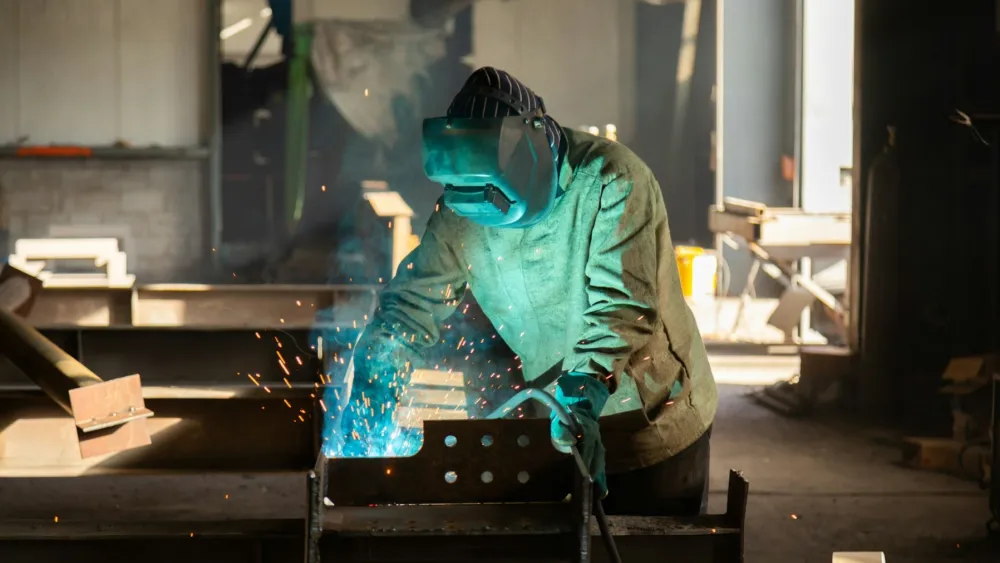
In Southeast Asia, capabilities in gas turbine component repair, aeroderivative servicing and compressor overhauls are becoming especially valuable. Technologies such as submerged arc welding, geothermal welding techniques, laser metal deposition and high-grade metallurgy for materials including 12Cr and Inconel 625 help extend the life of components once considered near retirement.
Realities
The default assumption is that only OEMS can manage complex turbine work, even through regional repair capability and advanced technologies can meet many of these needs.
Operational action
In the APAC region, where energy producers face transition pressures and infrastructure strain, downtime must be met with targeted strategy.
Combining advanced maintenance tools with embedded expertise and strong regional repair capability helps operators protect uptime, control cost and maintain resilience.










 Read Here
 Advertise
 Sign Up