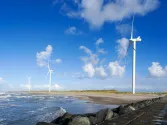
Taiwan wind push lifts demand for offshore vessels
Cost inflation and supply risk test shipbuilders as regional orders build.
Asia’s offshore wind build‑out is driving steady demand for specialised marine vessels, with Taiwan standing out as the clearest anchor market even as shipbuilders contend with higher costs and fragile supply chains.
“Unlike neighbouring markets such as Korea and Japan, which are in the early phases, Taiwan is a more mature market,” Chan Eng Yew, CEO at Strategic Marine Pte. Ltd., told Marine & Industrial Report.
That maturity is translating into consistent demand for offshore support assets, especially crew transfer vessels, he said via Zoom.
Chan said there have been repeat orders tied to wind-farm construction and operations rather than one‑off campaign work, giving vessel owners and builders clearer use visibility.
Strategic Marine has delivered a 27‑metre StratCat vessel to a Taiwanese company, designed as a multi‑role asset capable of multiple mission profiles. Chan said about eight units have been delivered in Taiwan to three owners, reflecting fleet standardisation by operators.
“These new‑generation vessels are already demonstrating 10% to 15% faster speed capability in terms of deadweight and transfer time,” he said.
Engineering demands in the Taiwan Strait have accelerated design changes, with operators requiring tighter station‑keeping and higher transit speeds to maintain schedules in harsh conditions. Chan said vessels must handle extreme wind, wave and current loads whilst preserving fuel efficiency.
The offshore wind supply chain is extending into financing. Chan said Taiwan has become the first Asian market where wind-farm projects have been refinanced, a signal that assets are moving from construction risk to longer‑term operational funding.
Cost pressure remains the main counterweight to demand. “We are facing noticeable increases, particularly in transportation costs alongside rising raw material prices,” he said.
Aluminium prices have risen over the past six to 12 months, he said, reflecting both energy‑intensive smelting and logistics constraints. The increase has fed directly into vessel pricing discussions with buyers.
Geopolitical tension has tempered activity in some markets, though Chan said it has sharpened focus on domestic energy supply. Whilst demand in some regions has slowed into a holding pattern, awareness of energy security has increased, he pointed out.
Strategic Marine has moved to cushion near‑term risk by locking in supply agreements and holding inventory with key vendors. “All of our deliveries for the next 12 months are not expected to be affected,” Chan said, adding that longer disruptions would need reassessment.













 Read Here
 Advertise
 Sign Up