Pet-friendly dining may lift core Hong Kong mall traffic
Weekend spending is expected to benefit central districts over suburban malls.
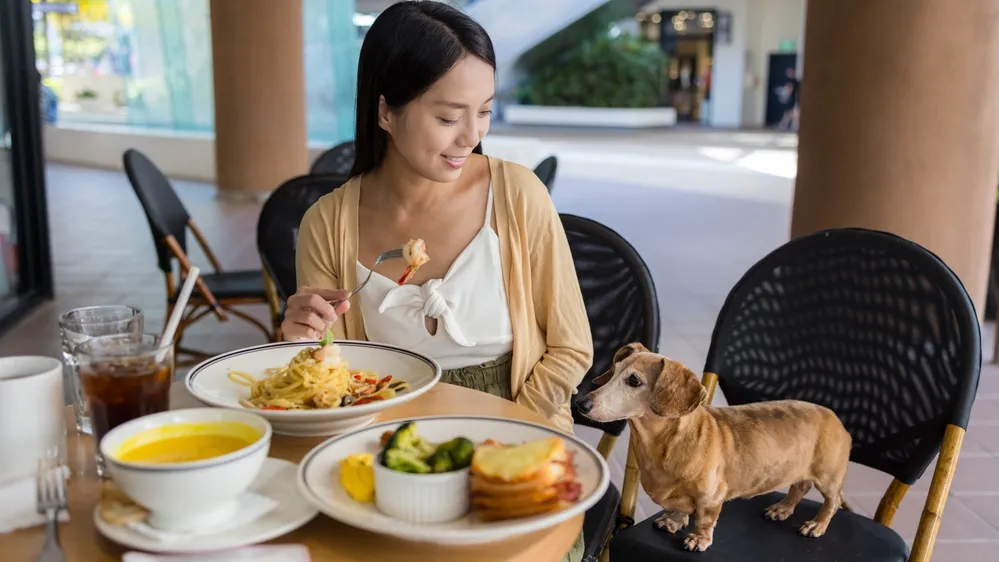
Hong Kong’s core district malls are likely to see a stronger uplift in weekend footfall than suburban centres as the city moves to relax rules allowing pet-friendly dining.
“Overall, we think it will have a very positive impact on footfall,” Philip Lam, director of retail at Savills (Hong Kong) Ltd., told Retail Asia via Zoom.
The government will begin accepting applications on 18 May for licences letting restaurants admit dogs under a programme covering as many as 1,000 venues, with initial approvals expected in July.
Lam said the policy could help retain weekend spending that has been flowing to Mainland China, particularly Shenzhen, as Hong Kong residents increasingly travel north on weekends.
He added that core district malls, rather than suburban lifestyle centres, are better placed to benefit because of their existing food and beverage density and infrastructure.
Kathy Lee, head of research and retail consultancy at Colliers International (Hong Kong) Ltd., said pet ownership has expanded across demographic groups, supporting demand for malls that cater to pet owners.
“The pet owner population in Hong Kong has been growing,” she said in a separate video interview, adding that many pet owners now visit malls weekly.
She said dining with pets has become an important part of lifestyle consumption, alongside broader leisure and retail experiences.
However, both retail consultants said allowing pets into restaurants alone would not be enough to drive long-term differentiation.
Lee said successful malls need outdoor spaces and supporting services such as pet retail zones, activity areas, and photo-friendly installations.
Lam said casual dining formats such as cafés and bakeries are likely to benefit most, whilst barbecue and hotpot operators may be less willing to participate due to hygiene constraints.
He also cited structural constraints in dense urban areas, including transport and parking access for pet owners.
Developers, he added, are already adjusting projects with larger terraces, balconies, and outdoor communal spaces to capture the trend.
Still, operational challenges remain, particularly around hygiene management and balancing customers with and without pets.
Lee said malls might need separate zones or clearer segmentation to manage differing customer preferences.
Lam said operators need stricter cleaning protocols and clearer rules to avoid friction between customer groups. Despite the constraints, he said the policy supports broader shifts toward experiential retail and longer dwell times in malls.
“Letting pets inside restaurants… would increase [customer] dwell time,” Lam said, adding that longer stays tend to support higher spending.
Lee added that operators should consider a broader range of pets beyond dogs given the growing diversity of pet ownership in Hong Kong, including cats.
















 Read Here
 Advertise
 Sign Up