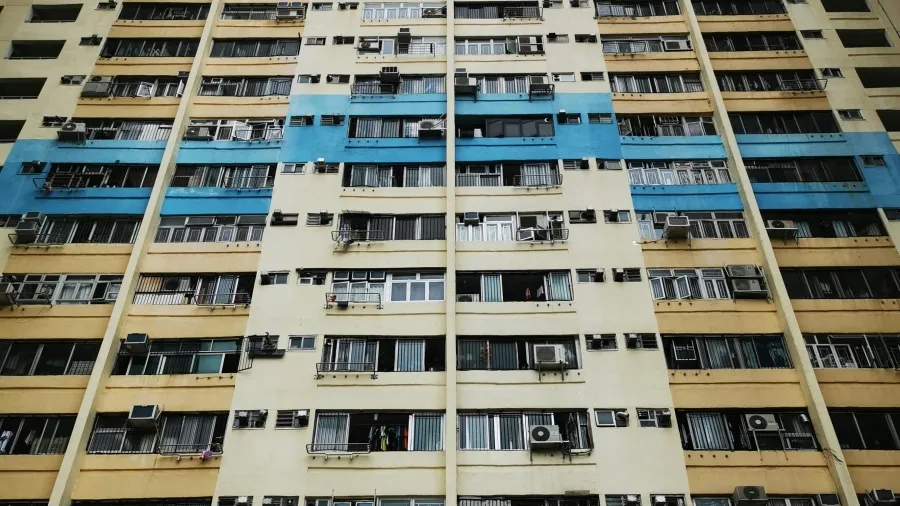
Subsidised resale homes draw buyers from private flats
The policy boosts turnover by pulling demand forward, not by lifting volumes long term.
Hong Kong’s move to allow more first‑time buyers to buy subsidised resale homes is redirecting demand away from entry‑level private flats, raising transactions but limiting scope for sustained price gains, analysts said.
The policy expands access for eligible households to buy previously owned public sale flats, increasing turnover in the subsidised market whilst reshaping buyer behaviour across the wider residential sector.
“The main effect is to front‑load demand and raise turnover, not permanently lift volumes,” Jack Tong, director of research and consultancy at Savills Hong Kong, told Hong Kong Business via Zoom. He added that liquidity would improve faster than prices, leaving pricing power constrained.
The program, known as the White Form Secondary Market, had its quota lifted to 7,000 units, increasing the number of households allowed to enter the subsidised resale market. Successful applicants get approved to buy eligible flats within a fixed period, creating cycles of concentrated activity.
But pricing momentum remains limited despite higher transaction levels. Subsidised resale prices are forecast to be flat or rise by as much as 3% over the next 12 months.
Average prices for secondary home ownership scheme units rose 1.9% to about $4m in January from a month earlier — close to a 16‑month high.
Transactions have picked up steadily. Secondary market volumes rose 12% in 2024 and a further 17% in 2025, with brokers projecting about 5,000 deals in the year ahead. That implies growth of 10% to 15%, driven by quicker deal execution and tighter availability in popular estates.
Market activity has become more compressed around approval periods under the scheme.
“Purchasing activity will be compressed into a shorter window featuring quicker absorption, tighter availability in popular estates, and faster deal execution,” Edgar Lai, senior director for valuation and advisory at Cushman & Wakefield Plc, said in an emailed reply to questions.
Policy changes are improving buyer conversion, after 15% to 20% of approvals previously lapsed without purchases. Over‑issuance and supplementary allocation aim to raise use to close to full take‑up.
“More active buyers within the same 12‑month certificate of eligibility to purchase window will intensify competition,” Tong said.
Buyer profiles are shifting towards younger and single buyers who are more price‑sensitive but willing to compete for smaller units. Demand has clustered around flats priced between $2.8m and $4m, typically under 450 square feet and close to transport links.
Lai said units around $3m in urban estates are drawing stronger interest, tightening supply and firming achieved prices in that bracket.
The diversion of first‑time buyers is weighing on private homes priced below $5m, particularly older units and those farther from transport hubs, where price gains are expected to remain at about 2% to 3%.
Greater liquidity in the subsidised market is also enabling existing owners to trade up, supporting private homes priced between $5m and $10m, where prices are forecast to rise by 5% to 8%, Tong said.


















 Read Here
 Advertise
 Sign Up