
AI enters the Philippine neighbourhood store
Widespread use could generate up to $48b in economic value by 2030.
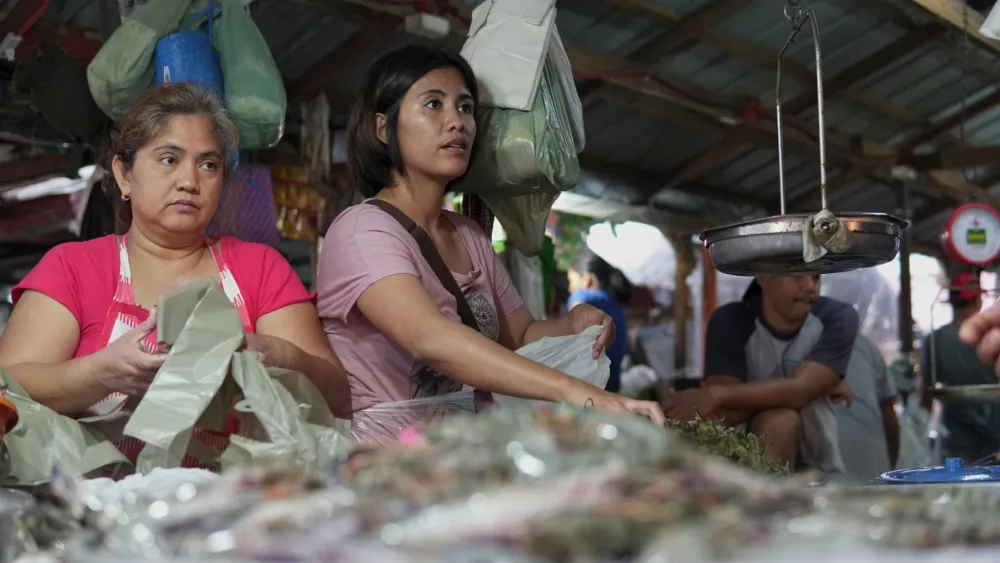
Artificial intelligence (AI) is beginning to reshape how the Philippines’ mom-and-pop retailers manage inventory, but adoption is colliding with the realities of thin margins, analogue habits, and uneven infrastructure that still define the sector.
By moving from handwritten notebooks to AI-enabled tools, micro-retailers can turn idle stock into faster sales, improving cash flow and reducing waste.
Widespread adoption could unlock as much as $48b (P2.8t) in economic value by 2030, according to estimates by Filipino tech firm The Pack Solutions, Inc. (Packworks) and Kadence International Business Research, Inc., drawing on data from the Philippine Institute for Development Studies.
Yet uptake remains limited. Only about 15% of local businesses use AI tools, leaving most small retailers to rely on intuition when deciding which products earn scarce shelf space.
For stores that operate out of homes or narrow storefronts, those decisions can determine whether capital works or sits unsold.
“When sari-sari (mom-and-pop) stores, mini-groceries and other small retail outlets use AI tools, owners can more easily identify underperforming products and make better decisions about what to keep, promote or replace,” Iris Lorenzo, managing director at Kadence International Philippines, told Retail Asia. That matters because space is limited and cash flow is tight, she pointed out.
AI tools can expose patterns that are hard to spot manually, such as slow-moving items that quietly tie up capital or products that sell best at specific times.
In theory, this lets vendors focus on fast-selling goods and adjust pricing or promotions with more confidence.
In practice, barriers remain high. Lorenzo cited the “analogue gap,” where daily operations still revolve around handwritten records of sales and credit rather than digital data that algorithms require.
Smartphones that can run AI-enabled apps remain expensive for many vendors, whilst patchy internet access in some provinces limits use.
There are also cultural frictions. Informal credit is common in mom-and-pop stores and rooted in personal relationships. Algorithms may flag these transactions as financial risk, creating mistrust when machine recommendations clash with social realities.
At the same time, many AI tools present dense dashboards instead of simple instructions, which can overwhelm owners who are used to running shops by feel.
Over-reliance on AI carries risks as well. “AI outputs are only as good as the data and signals behind them,” Lorenzo said in an emailed reply to questions.
If recommendations rely on suppliers or urban supermarket data, they may favour big brands and overlook local buying habits, limiting product choice and weakening a store’s community role.
Still, early results suggest gains are possible when tools are adapted to small retailers’ needs.
Packworks said about 300 mom-and-pop stores that used its AI-powered Store Insighting Project posted a 17% increase in sales over two weeks.
“They used this information to either run promos or curate their goods,” Andoy Montiel, Packworks chief data officer, said in a separate email. “Capital sleeps if goods aren’t sold.”
Beyond stores, AI may also reshape distribution. Over the next 12 to 24 months, Lorenzo expects distributors to rely more on store-level sales data, shifting from fixed delivery routes to demand-driven schedules.
That could mean more targeted deliveries and assortments tailored to neighbourhood demand.
Mass adoption amongst mom-and-pop stores will take time. Progress depends on adding AI to tools vendors already use, like point-of-sale and ordering apps, and improving coordination amongst government, tech providers, and the private sector.
Local platforms such as Packworks, Peddlr, and Growsari are trying to bridge the gap by replacing notebooks with apps that can function with limited connectivity.
“The sari-sari store owner of 2030 won’t think of themselves as a tech user,” Lorenzo said. “They’ll still be a store owner—the phone will quietly handle restocking and lending decisions in the background.”








 Read Here
 Advertise
 Sign Up