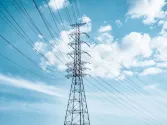
Will low premiums persist in offshore energy insurance?
Neither frequency nor severity of claims significantly impacted market capacity.
Insurance premiums for offshore renewable energy and infrastructure projects are expected to remain low for the next two to three years, according to NARDAC, a specialist energy and infrastructure insurance broker and Managing General Agent (MGA),.
This continues the ‘soft market’ trend that began in 2023, despite rising claims in the sector, particularly for cable damage. Inflationary pressures have also increased the cost of repairs, further raising the cost of claims for insurers.
According to NARDAC’s research, however, neither the frequency nor the severity of these claims has significantly impacted market capacity.
Premiums and deductibles have not risen to match the growing sums insured or the rising costs faced by insurers.
The company gathered data from 18 major insurers in the London market, which revealed a mean capacity of $164m per project, with a modal average of $200 million.
Lead insurers were found to write line sizes between 12.5% and 20%, with a modal line of 15%. This data indicates that London markets are well-capitalized and willing to insure significant portions of project risk.
The research also showed strong insurer support for specific offshore projects.
Interconnector and fixed offshore wind projects saw 94% support from insurers, whilst 89% were willing to cover grid connection developments, and 84% would insure floating offshore wind projects. Support for wave and tidal energy projects was lower, at 56%.
With a forecasted slowdown in offshore wind development until 2027, there is an oversupply of insurance capacity in the market, keeping premiums low and prolonging soft market conditions.
Around 33% of the capacity surveyed comes from new insurers, including traditional energy underwriters looking to diversify from oil and gas.
Rob Bates, Partner at NARDAC, emphasised that whilst the current market favours buyers, the situation is not sustainable.
When claims inevitably arise, insurers are expected to tighten terms and raise deductibles. Bates also predicted a market correction as offshore wind projects ramp up toward the end of the decade, which could reduce the oversupply of underwriting capital.














 Read Here
 Advertise
 Sign Up